DP-900 Online Exam

Microsoft Azure Data Fundamentals

334 questions available ยท Page 1 of 34

View study plans
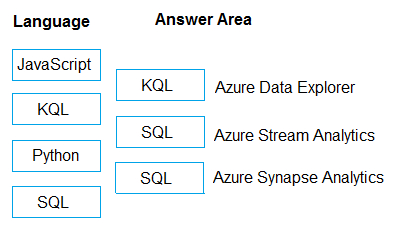
Question 1 Drag & drop

DRAG DROP

Match the terms to the appropriate descriptions.

To answer, drag the appropriate term from the column on the left to its description on the right. Each term may be used once, more than once, or not at all.

NOTE: Each correct match is worth one point.
Question diagram
Show answer and explanation
Correct answer diagram
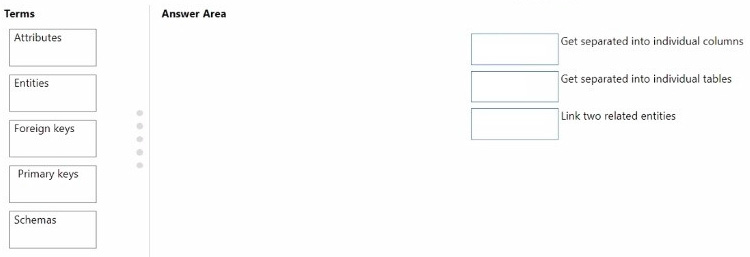
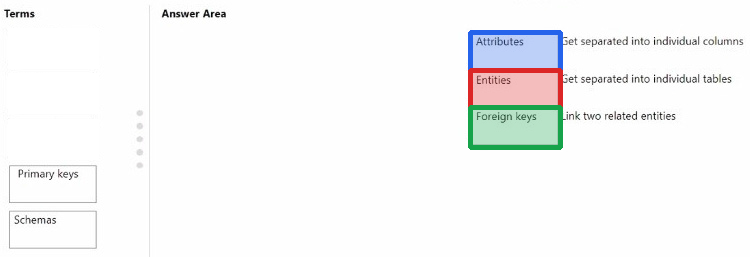
Question 2 Drag & drop

DRAG DROP

Match the database normalization terms to the appropriate descriptions.

To answer, drag the appropriate term from the column on the left to its description on the right. Each term may be used once, more than once, or not at all.

NOTE: Each correct match is worth one point.

Question diagram
Show answer and explanation
Correct answer diagram
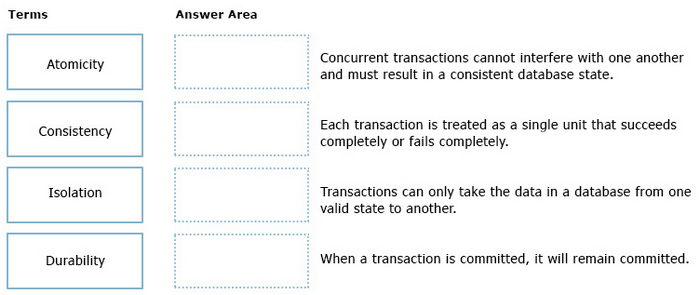
Question 3 Drag & drop

DRAG DROP

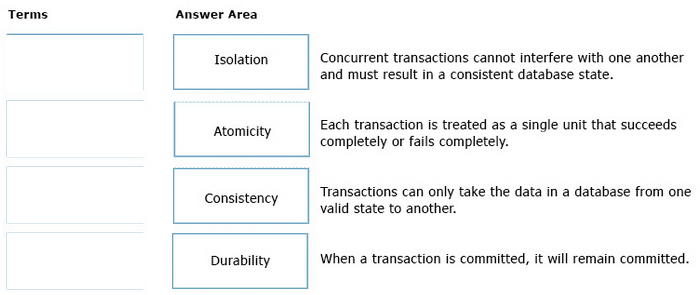
Match the ACID terms to the Appropriate descriptions.

To answer, drag the appropriate term from the column on the left to its description on the right. Each term may be used once, more than once, or not at all.

NOTE: Each correct match is worth one point.

Question diagram
Show answer and explanation
Correct answer diagram
Question 4 Drag & drop

DRAG DROP

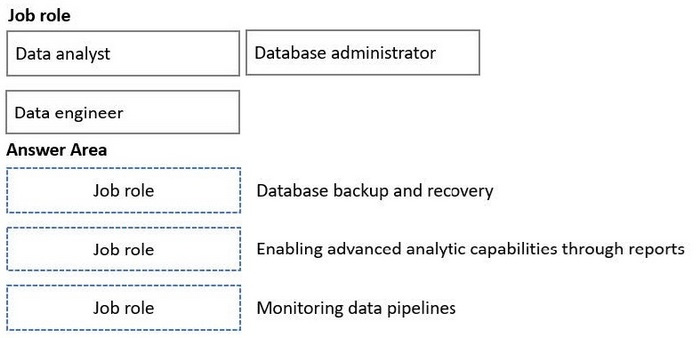
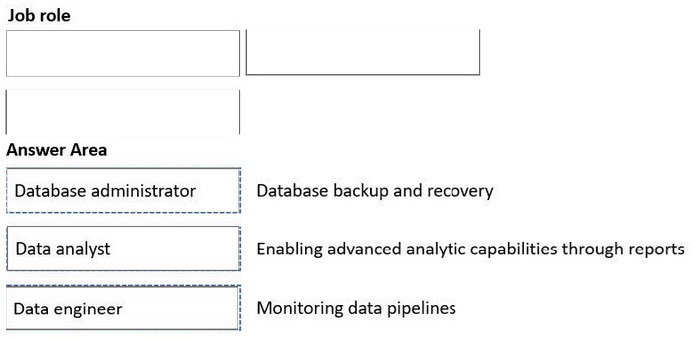
Match the job roles to the appropriate tasks.

To answer, drag the appropriate role from the column on the left to its task on the right. Each role may be used once, more than once, or not at all.

NOTE: Each correct match is worth one point.

Question diagram
Show answer and explanation
Correct answer diagram
Question 5 Drag & drop

DRAG DROP

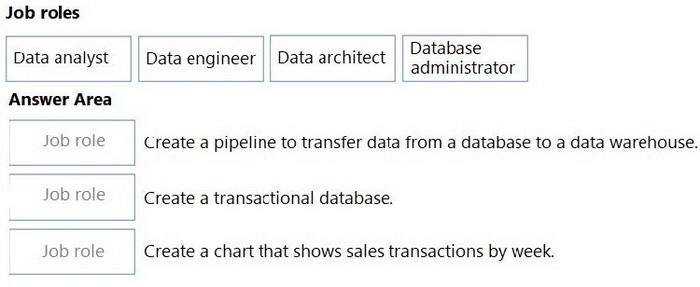
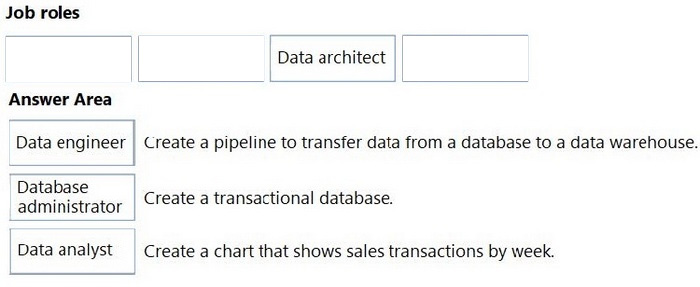
Match the job roles to the appropriate tasks.

To answer, drag the appropriate role from the column on the left to its task on the right. Each role may be used once, more than once, or not at all.

NOTE: Each correct match is worth one point.

Question diagram
Show answer and explanation
Correct answer diagram
Explanation

The job roles define differentiated tasks and responsibilities. In some organizations, the same person might perform multiple roles; so in their role as database administrator they might provision a transactional
database, and then in their role as a data engineer they might create a pipeline to transfer data from the database to a data warehouse for analysis.
https://learn.microsoft.com/en-us/training/modules/explore-roles-responsibilities-world-of-data/2-explore-job-roles

Question 6 Drag & drop

DRAG DROP

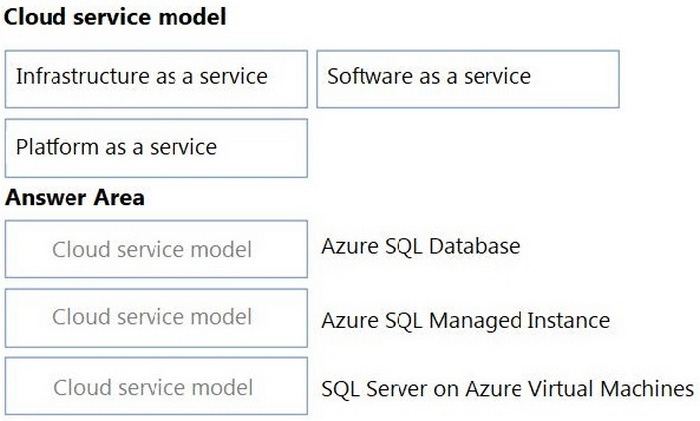
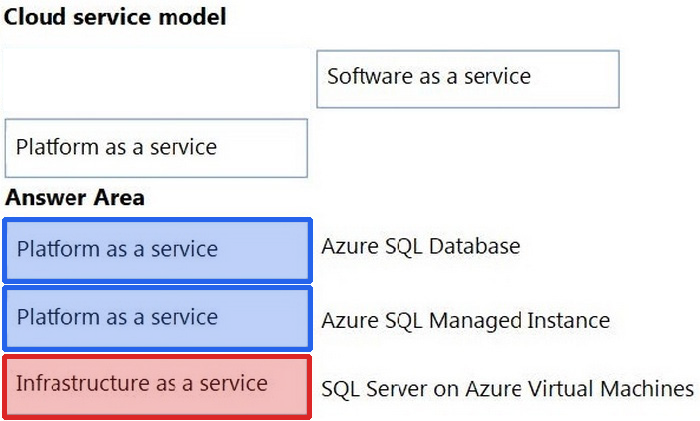
Match the cloud service model to the appropriate Azure relational database service.

To answer, drag the appropriate cloud service model from the column on the left to its service on the right.

Each model may be used once, more than once, or not at all. NOTE: Each correct match is worth one point.

Question diagram
Show answer and explanation
Correct answer diagram
Question 7 Drag & drop

DRAG DROP

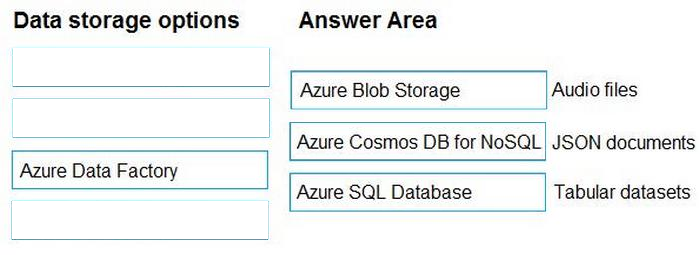
Match the data storage options to the appropriate types of data.

To answer, drag the appropriate data storage option from the column on the left to its data type on the right. Each data storage option may be used once, more than once, or not at all.

NOTE: Each correct match is worth one point.

Question diagram
Show answer and explanation
Correct answer diagram
Question 8 Drag & drop

DRAG DROP

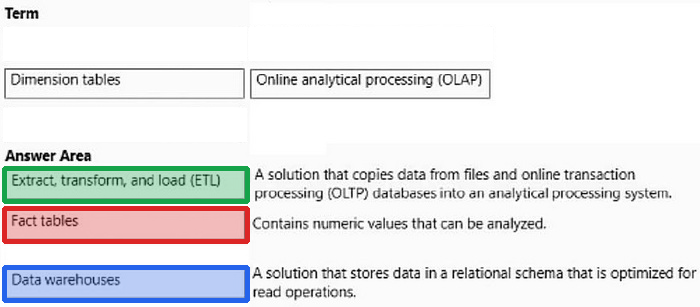
Match the terms to the appropriate descriptions.

To answer, drag the appropriate term from the column on the left to its description on the right.

Each term may be used once, more than once, or not at all. NOTE: Each correct match is worth one point.

Question diagram
Show answer and explanation
Correct answer diagram
Explanation

ETL
https://learn.microsoft.com/en-us/azure/architecture/data-guide/relational-data/etl

Fact table
https://www.techtarget.com/searchdatamanagement/definition/facttable#:~:text=A%20fact%20table%20stores%20quantitative,fact%20table%20can%20be%20analyzed.

DW
https://learn.microsoft.com/en-us/azure/architecture/data-guide/relational-data/data-warehousing

Question 9 Drag & drop

DRAG DROP

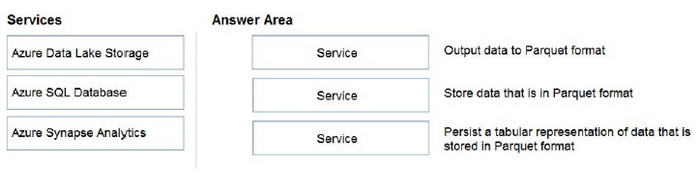
Match the Azure services to the appropriate requirements.

To answer, drag the appropriate service from the column on the left to its requirement on the right.

Each service may be used once, more than once, or not at all. NOTE: Each correct match is worth one point.

Question diagram
Show answer and explanation
Correct answer diagram
Explanation

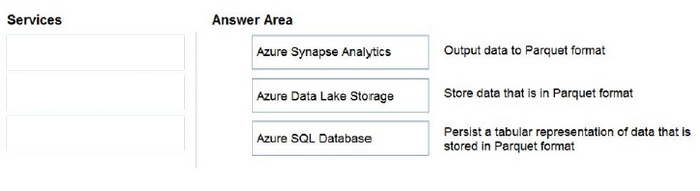
Azure Synapse Analytics: Output data to parquet format Azure Data Lake Storage: Store data that is in parquet format Azure SQL Database: Persist a tabular representation of data that is stored in parquet format

Question 10 Drag & drop

DRAG DROP

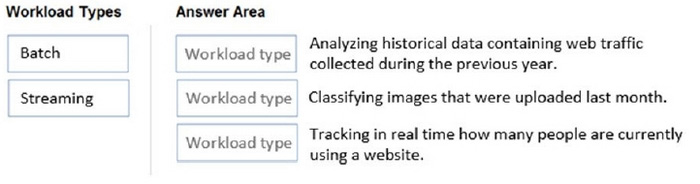
Match the types of workloads to the appropriate scenarios.

To answer, drag the appropriate workload type from the column on the left to its scenario on the right.

Each workload type may be used once, more than once, or not at all. NOTE: Each correct match is worth one point.

Question diagram
Show answer and explanation
Correct answer diagram
Explanation

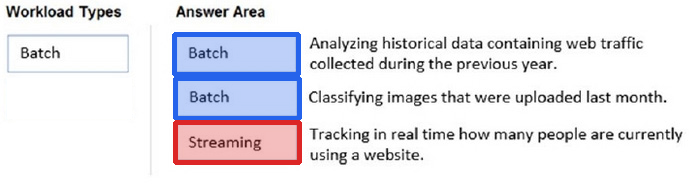
Box 1: Batch
The batch processing model requires a set of data that is collected over time while the stream processing model requires data to be fed into an analytics tool, often in micro-batches, and in real-time.
The batch Processing model handles a large batch of data while the Stream processing model handles individual records or micro-batches of few records.
In Batch Processing, it processes over all or most of the data but in Stream Processing, it processes over data on a rolling window or most recent record.
Box 2: Batch
Box 3: Streaming

References:
https://k21academy.com/microsoft-azure/dp-200/batch-processing-vs-stream-processing